
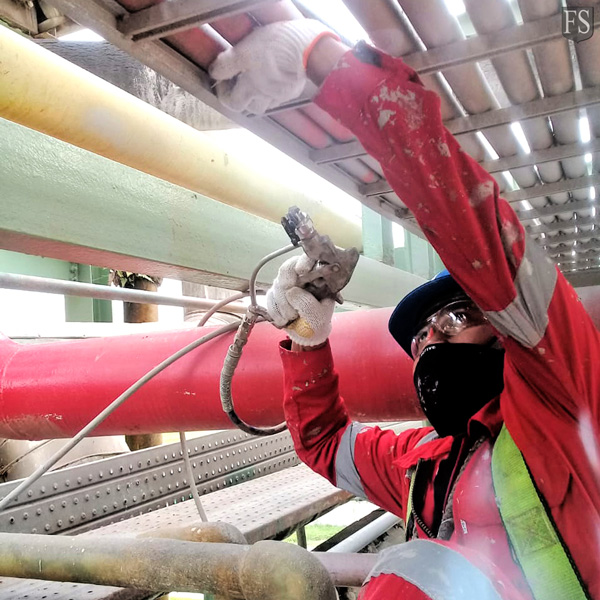
Applying Fire Protection Coating on Your Cables
Fire protection coating for cables can be used on any cable, including power, telecommunications, and data cables. There are many reasons to want to use Fire Protection Coating for Cables. The first reason is that cable fire protection saves lives as it protects against fire and heat damage. The coating also reduces smoke and gas emissions and the spread of fire. Another reason would be that fireproof coating helps to reduce downtime by protecting cables against corrosion caused by water, chemicals or other environmental factors.
How to Choose the Best Fire Protection Coating for Cables?
Cable coating is an essential part of fireproofing. It is a layer of material that prevents cables from being damaged by fire. To choose the best cable coating, you need to consider some factors such as:

FS coated cables in a fire test – cables are intact after the fire.
Cost: The best fire retardant cable coating should be affordable and cost-effective.
Durability: The best cable coatings should be durable and long-lasting, so that they can withstand any environment or circumstance.
Fireproofing: The best cable coatings should be able to protect cables from being damaged by heat, flames, or sparks in case of a fire.
Application procedure: If you don’t have the knowledge and manpower to do the job, you may order our FS specialist team to do the job as a turn-key operation. We do all the preparations, the applications and we offer a warranty for the protected cables
How to Apply the Fire Protection Coating on Your Cable?
The fire protection coating on cables is a thin, water-based liquid applied to the cable by spray-gun or brush. The coating will prevent the cables from being ignited by a flame or spark. The fire retardant coating has been around for decades, and it has been used extensively in industrial settings. Cable coating is either a two-component, fast drying epoxy coating, or a water-based coating with low VOC, like our FS coating, designed to be applied quickly and easily by spray-gun or brush.
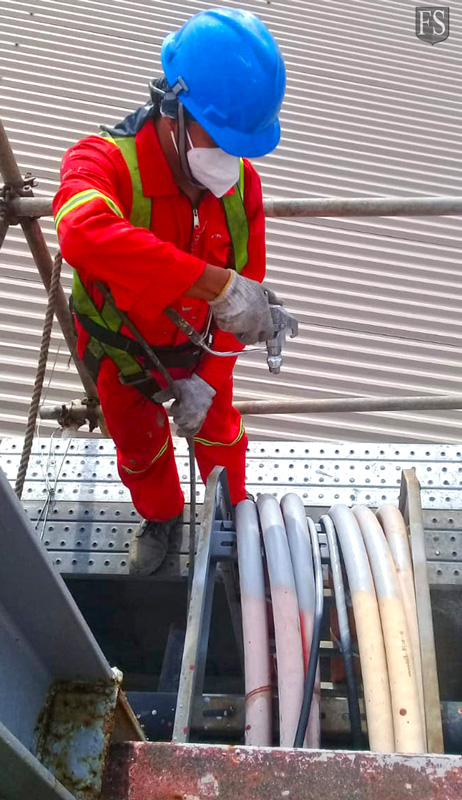
Fireproof coating of HV cables
There are many advantages of applying the fire retardant coating on your cable:
- It prevents accidental fires and reduces the risk of property damage.
- The cost of application is low.
- There are no harmful chemicals that pose any health risks.
- It can be used on all types of cables (e.g., copper, aluminum, steel).
Conclusion: What are the Benefits of Using a Fire Protection Coating on Cables?
Cables are an important part of any office or industrial facility. They are used for everything from power to communication. There is much potential for damage to these cables, which can cause your business to lose productivity and money. Fire retardant coatings are crucial for preventing fires in your office or industrial facility. These coatings give you peace of mind; your cables will be protected in the event of a fire or other disaster.
The FS coatings also protects cables from environmental disturbance and can extend the service life of your cables by 20 years or more, we call it Sustainable Cable Management.
A fire retardant coating is an inexpensive way to protect your cables from damage and fires, so it is worth investing in this type of coating for all your vital cables. FS coatings are certified as fire resistant, which offers a higher protection than fire retardant.
At FS, we tested our fire protection coatings to the Hydrocarbon Fire Curve of 1100° Celsius for a minimum of 60 minutes. Our intumescent coating system is fire resistant for up to 3 hours at 830° Celsius.